
Crosby County Court Records After Arrest
Crosby County court records after a jail arrest start after the custody event. The Crosby County Sheriff's Office, led by Sheriff Corey Nunley, operates Crosby County Jail and handles the local booking record. That record shows that a person was taken into custody, the arresting agency, the booking charge if released, and any bond or hold that jail staff can disclose. The court record is different. It is the file opened when a prosecutor, clerk, magistrate, or grand jury process turns the arrest into a criminal case.
For Crosby County, that path may involve the District Attorney and County Attorney, the District Clerk, the County Clerk, and the Justice of the Peace, depending on the charge level and court. Crosby County Jail can answer custody questions, while the clerks and prosecutor answer filed-charge questions. Keeping those offices separate helps avoid treating a booking event as the final court record.
The usual path is arrest, booking, magistrate warnings, prosecutor review, charging document, and court case. Texas Code of Criminal Procedure Article 15.17 requires a person arrested in Texas to be taken before a magistrate without unnecessary delay and no later than 48 hours. That hearing can cover rights, counsel, accusation, and bail. It does not always mean the final charge has been filed. The prosecutor may later reject a booking charge, reduce it, add a new count, or present a felony to a grand jury.
For custody and booking confirmation, use Crosby County jail inmate records. For the court side, start with re:SearchTX and the local clerks. Booking photos belong to sheriff records, not ordinary court case indexes, so mugshot questions fit the Crosby County jail mugshots process.
Find Crosby County Court Records
The statewide court search channel is re:SearchTX. It can be useful after a Crosby County arrest because it searches Texas court records by party name, case number, and available filters. The system is dynamic, and full access may require registration. Not every older file, document image, sealed record, or local clerk record will appear online. If the search does not show the case, the next step is a clerk contact, not an assumption that no charge exists.
The District Clerk is Shari Smith at 201 W Aspen, Suite 207, Crosbyton, TX 79322, phone 806-675-2071, fax 806-675-2433, and email dc72nd@crosbycountytx.com. District clerk records are important for felony and district-court matters. The County Clerk is Tammy Marshall at 201 West Aspen, Suite 102, phone 806-675-2334, fax 806-675-2980. County clerk records may matter for county-level criminal files and other local records. The Justice of the Peace, Judge Irma Casias, can matter for magistrate, Class C, warrant, and preliminary issues.
The official re:SearchTX page is a good match for court lookup work. The re:SearchTX court-record search landing page shows the statewide entry point used for Texas case searches.
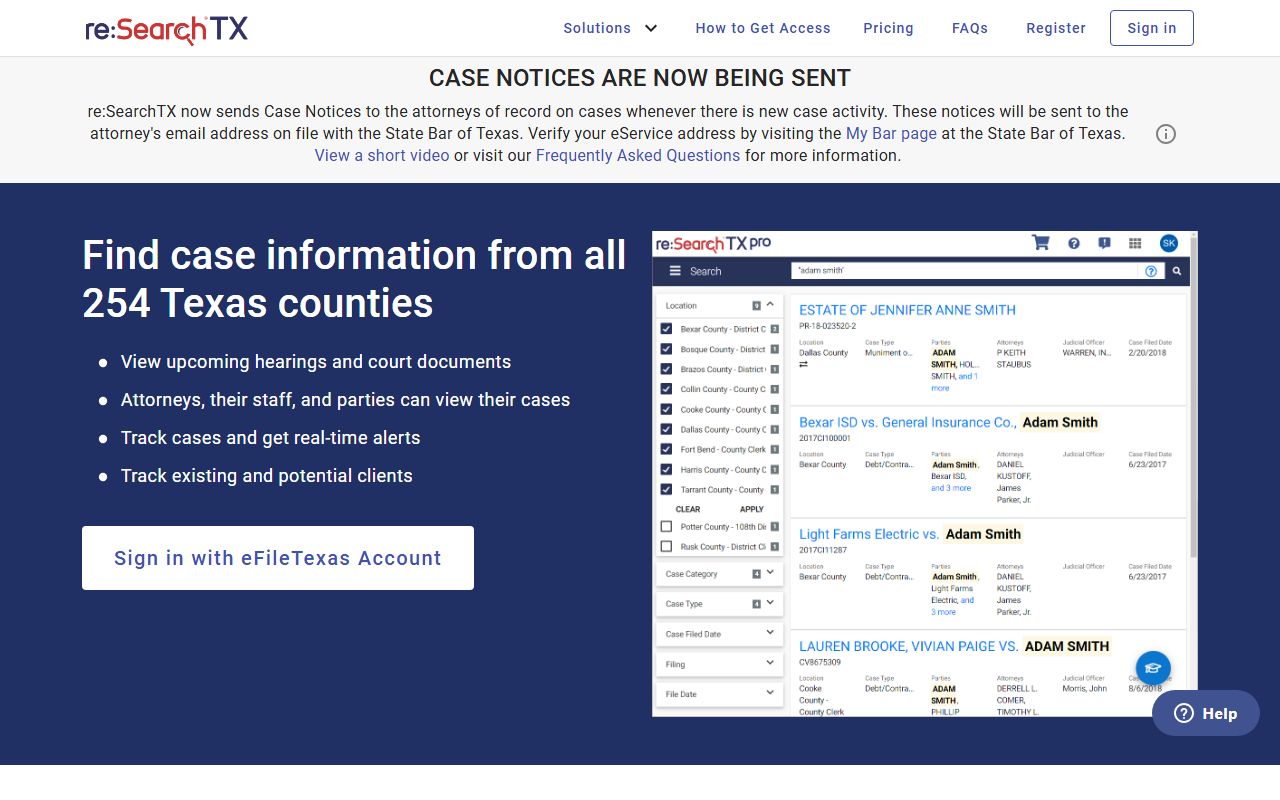
Use the statewide portal as a starting point, then verify unclear Crosby County criminal case details with the clerk that keeps the actual file.
| re:SearchTX Field | Use After a Crosby County Arrest | Notes |
|---|---|---|
| Name or party search | Search by defendant name when the case number is unknown. | Try full legal name and known spelling variants. |
| Case number | Use a cause number from bond paperwork, clerk staff, or court notice. | This is the cleanest search when available. |
| Court or location filters | Narrow results to Crosby County or the relevant court if the interface permits. | Filter labels can vary as the portal changes. |
| Date filters | Check filing windows after the booking date. | Very recent arrests may not have a filed case yet. |
| Register or sign in | Some records or images may require an account. | Clerk access can still be needed for complete files. |
Crosby County Arrest to Case Path
A Crosby County jail arrest can move through several offices in a short time. A deputy, city officer, DPS trooper, warrant officer, or other agency may bring the person to Crosby County Jail. Jail staff complete booking, property inventory, identification, fingerprints, photo, screening, charge entry, and release or housing steps. The person may then appear before a magistrate for warnings and bail under Article 15.17. At that point, the court records after a jail arrest may still be incomplete.
- Confirm the booking date and booking charge with the Crosby County Sheriff's Office at 806-675-7301.
- Allow for filing lag when the arrest is recent, because a court case may not appear the same day.
- Search re:SearchTX by name, cause number, date, and Crosby County filters when available.
- Call the District Clerk for felony or district-court matters and the County Clerk for county-level matters.
- Ask for the cause number, filed charge, court, next setting, bond action, and public document access process.
- Compare the court charge with the jail booking charge before relying on either one alone.
Prosecutor review is the main reason a booking charge can differ from a court charge. Michael Sales is listed by the county as District Attorney and County Attorney, phone 806-675-2062 and fax 806-675-2787. The prosecutor may proceed by complaint, information, or indictment, or may decide that a charge should not go forward. A person can be booked on one allegation while the filed case later uses a different wording, level, or count.
Crosby County Charging Records
Charging documents are the bridge between the jail arrest and the court record. They state what the government alleges and give the clerk a basis to open or track the criminal case. The document type depends on the court, charge level, and stage of the case. The names can sound formal, but the practical question is simple: what document says the charge was filed, and which court keeps it?
| Document | Common Role | Crosby County Record Use |
|---|---|---|
| Complaint | Sworn accusation or initial charging basis. | May support a warrant, magistrate action, or lower-court matter. |
| Information | Prosecutor-filed charging paper. | Common in misdemeanor cases and some non-indictment settings. |
| Indictment | Grand-jury felony charging instrument. | Often central to district-court felony records. |
| Warrant or capias | Court or magistrate order for arrest. | Can lead to booking, but it is not the final disposition. |
Ask the clerk for the filed charging document, not just the offense name. A filed information or indictment can show counts, statute references, offense dates, degree or class, and amendments. The sheriff can confirm custody, but the clerk is usually the better source once the criminal case has been filed.
Crosby County Charge Status
Charge status is the current state of a court case or count. It can change many times after a jail arrest. A pending charge may be amended, reduced, dismissed, deferred, or resolved by plea or trial. A jail roster, if one were available, would usually show custody and booking facts. Crosby County does not publish an official roster online, so status checks often require the sheriff, re:SearchTX, and local clerk contact together.
| Status | Plain Meaning | What to Verify |
|---|---|---|
| Pending | The case or count is open. | Next setting, bond, attorney, and filed charge. |
| Amended | Charge wording, count, or level changed. | Read the latest charging document or docket entry. |
| Reduced | The charge moved to a lesser offense or level. | Confirm whether the original count remains. |
| Dismissed | The count ended without conviction. | Ask whether expunction may require a separate court order. |
| Convicted | Guilt was entered by plea, verdict, or other adjudication. | Check sentence, jail credit, probation, or TDCJ transfer. |
| Deferred adjudication | Supervision may occur without final conviction if completed. | Review the order and eligibility rules with the court file. |
Crosby County Bond Records
Bond information sits between jail custody and the court file. Texas Code of Criminal Procedure chapter 17 governs bail and bond. In Crosby County, the practical first step is to call the sheriff and ask whether bond has been set, what type it is, what court controls it, and whether another hold blocks release. A person can have a posted bond on one charge and still remain in jail because of a parole warrant, out-of-county warrant, federal hold, or other detainer.
| Bond Type | How It Works | Crosby County Question |
|---|---|---|
| Cash bond | Full amount is posted with the proper office. | Ask where payment is accepted and during what hours. |
| Surety bond | A licensed bondsman posts surety for a fee. | Confirm local paperwork and court requirements. |
| Personal bond or PR bond | Release is based on promise and conditions. | Ask whether a magistrate or court has approved it. |
| No-bond hold | Release is not available on that charge or hold. | Ask which court or agency controls the hold. |
| Detainer | Another agency has a custody interest. | Ask if transfer is expected after local release. |
Charges and Convictions
A charge is an accusation. A conviction is a final result entered by plea, verdict, or adjudication. That difference matters in Crosby County court records after a jail arrest because a booking can appear before the prosecutor finishes review and long before the court reaches a final outcome. A person may have charges dismissed, amended, reduced, or deferred. A custody record alone should not be read as proof of guilt.
| Topic | Charge | Conviction |
|---|---|---|
| Meaning | An accusation filed or listed in the case. | A final guilt result or accepted plea. |
| Timing | Often early in the case. | Only after court action. |
| Proof level | Based on probable cause or charging decision. | Requires legal proof, plea, or adjudication. |
| Record risk | Can still appear in public records. | Can affect sentence, custody, probation, or TDCJ transfer. |
For statewide criminal-history context, Texas Code of Criminal Procedure chapter 66 governs criminal-history record systems. Court records, jail booking records, and criminal-history records are related, but they are not the same thing. Each system has its own custodian and update cycle.
Sealed and Expunged Records
Some court records after an arrest may become restricted. Texas Code of Criminal Procedure chapter 55 covers expunction when a person meets the statute and obtains a court order. Expunction can remove eligible arrest records from public access. Sealing is different. It limits public visibility, but it may not destroy the record or block every lawful user. Eligibility depends on the charge, disposition, waiting period, prior history, and court order.
| Topic | Sealed | Expunged |
|---|---|---|
| Public access | Hidden or limited by court order. | Removed or treated as unavailable when the order applies. |
| Record status | May still exist for limited legal uses. | May be destroyed or returned under the order. |
| Common trigger | Certain deferred or eligible outcomes. | Dismissal, acquittal, pardon, or other statutory eligibility. |
| Best source | Court order and clerk file. | Expunction order and affected agencies. |
Important: Crosby County Inmate Population is not a consumer reporting agency, and record lookups may not be used for FCRA-covered decisions.
Crosby County Warrant Records
No official Crosby County active-warrant search page was found on the county website. That does not mean a warrant does not exist. A warrant can come from district court, county court, justice court, municipal court, another county, parole authorities, or federal court. A warrant can also be the reason a person is booked at Crosby County Jail even when the original case began elsewhere.
For local warrant and custody questions, call the Crosby County Sheriff's Office at 806-675-7301. For lower-court or magistrate matters, Justice of the Peace Irma Casias can be relevant at 806-675-2523. For district or county case records, use the clerks. A person who may have an active warrant should not rely on website silence. Contact the court or an attorney before appearing in person if arrest risk is a concern.
Note: re:SearchTX can show case activity, but warrant status may not be complete, public, or current in an online search.
Crosby County Record Requests
Texas Government Code chapter 552, the Texas Public Information Act, gives the public a process to request records from government bodies, subject to exceptions. For Crosby County court records after a jail arrest, send the request to the office that keeps the record. Booking sheets and booking photos usually start with the sheriff. Filed criminal case records usually start with the District Clerk or County Clerk. Prosecutor work product, active investigations, juvenile material, sealed records, and protected identifiers can be withheld or redacted.
The Texas Attorney General publishes official public-information request guidance. The Texas Attorney General public-information request guide explains that a request should identify the records sought and go to the governmental body that maintains them.
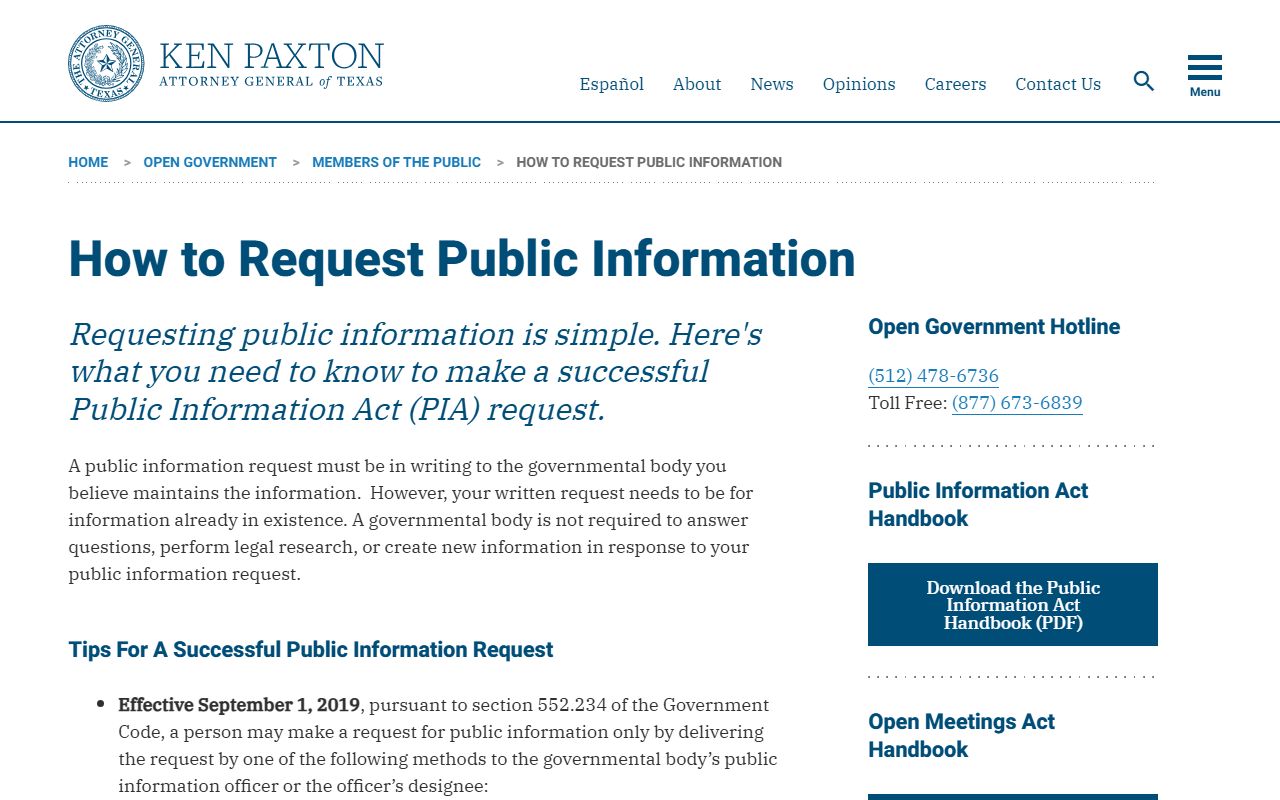
A narrow request works best. Include the person's name, date of birth if known, arrest date, agency, case number if available, and the exact record type sought.